Stop guessing which
containers to book.
CBM tells you volume. Packing fills space. But the cheapest container mix, packed to maximum density — that's where the real money is saved.
The only engine that computes the cheapest container mix with the most space-efficient packing plan — in one click. Used in production by global supply chain teams.
Simulation Speed
< 2s
per full shipment
3D Visualization
Live
watch it load, in real time
To Start
Free
no card, no signup
Beyond CBM. Beyond packing. The full picture.
Three capabilities that most load planners don't have — and the ones that actually save money.
Container Selection Intelligence
Most tools pack cargo into containers you've already chosen. We find the cheapest combination of container types that fits everything — before you book a single slot.
Interactive 3D Simulation
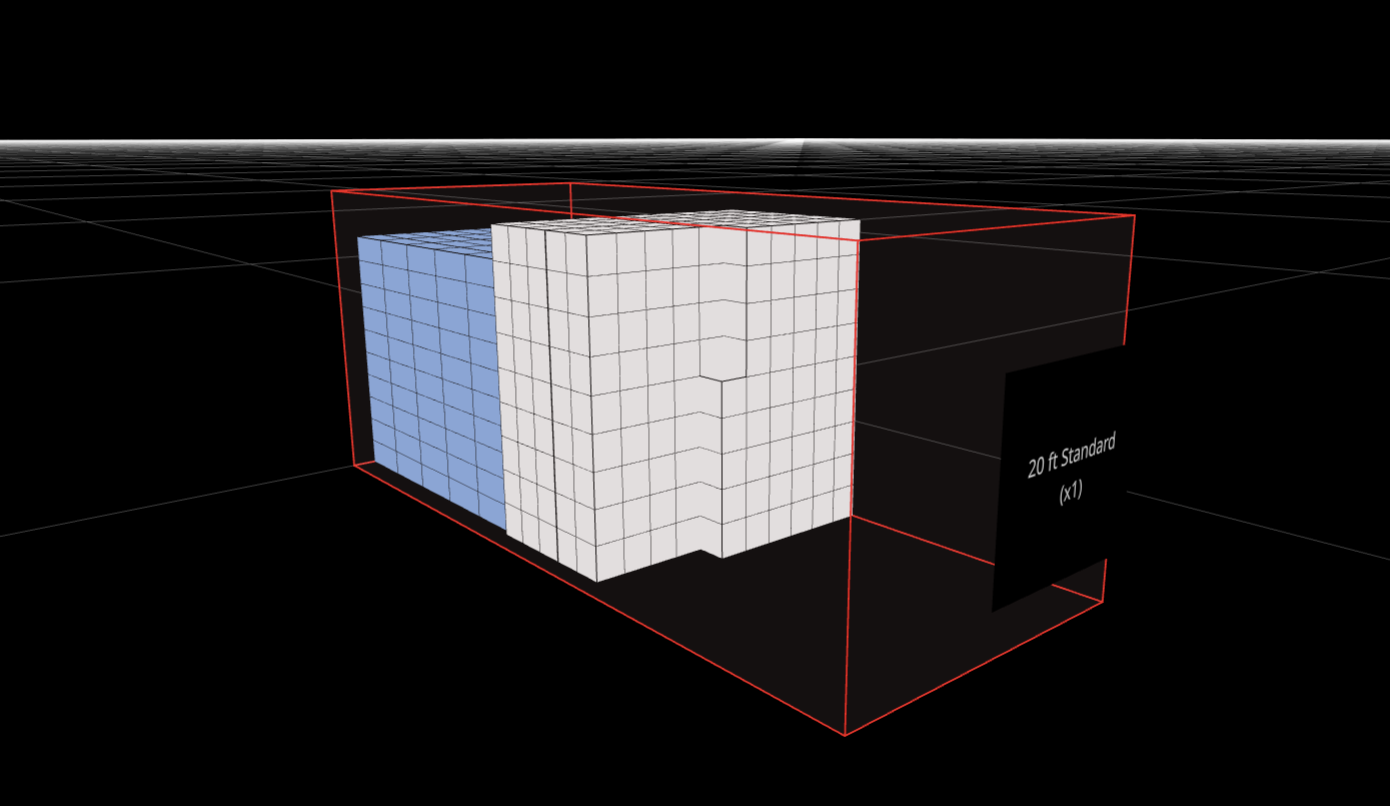
Play, pause, seek through the loading sequence. Zoom, rotate, inspect every layer. A virtual loading bay — not a static render. Share a link with your ops team in one click.
API-First Architecture
One REST call returns container recommendations, full packing plans, cost breakdowns, and 3D coordinates. Embed our engine in your TMS or portal in under 30 minutes.
From cargo list to optimal plan in under 2 seconds.
Define your cargo
Enter box dimensions, weights, quantities, and stacking rules. Add pallets if needed. Under 2 minutes for a full shipment.
Supports hand-stuffed and palletized modes. Custom orientations and fragility rules.
Evaluating combinations…
1 × 20ft Standard
Over capacity (143%)
2 × 20ft Standard
1 × 40ft Standard
Engine finds the cheapest container mix
Our algorithm evaluates every combination (20ft, 40ft, 40ft HC) and finds the one that costs least while fitting everything.
Every combination is checked automatically, not just the obvious one — so the answer is actually the cheapest, not just a fit.
Cost
$2,900
Weight
864 kg
Volume
4.32 m³
Get a 3D plan + full cost breakdown
See every carton in a live 3D simulation: play, pause, seek. Share the result link with your team. Cost and utilisation per container.
Shareable link. Exportable cost report. Container-level weight, volume, and item details.
< 2s
Simulation time
2-in-1
Selection + packing
16+
Container types
100%
API-accessible
Ready to stop overpaying
for containers?
Start with 10 free simulations. No card. No commitment. Or talk to us about embedding the API in your platform.